
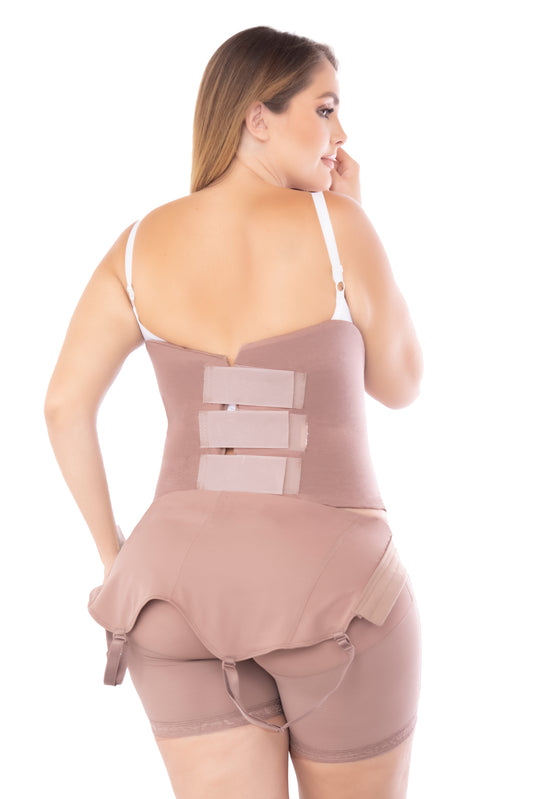

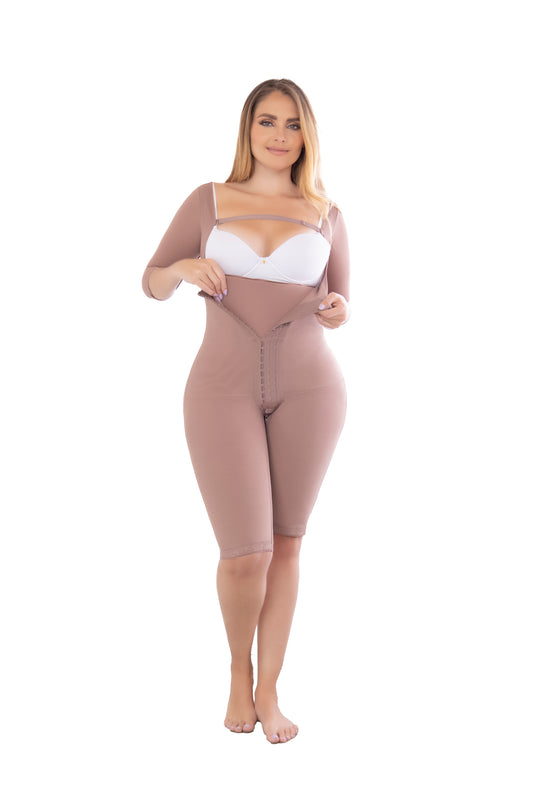


After a tummy tuck, also known as abdominoplasty, your surgeon may prescribe an abdominal binder, a post-operative compression garment, both at different times, or another type of support.
The appropriate recommendation depends on the operation, muscle repair, incision, drains, swelling, and your individual health considerations.
There is no single compression garment or recovery schedule that is right for every tummy tuck patient.
What May a Post-Operative Garment Support?
Depending on the procedure and your surgeon’s protocol, a compression garment may support comfort and help manage swelling during recovery.
However, a garment should not be presented as guaranteeing that it will:
-
Prevent seromas or other complications
-
Eliminate swelling
-
Heal the incision
-
Prevent scars
-
Guarantee skin tightening
-
Determine the final surgical result
Compression is one part of a broader recovery plan that may also include medical appointments, wound care, movement instructions, medication, and other treatments prescribed by your surgical team.
Garment Features That May Matter
Discuss these features with your surgeon before purchasing your tummy tuck garment.
Appropriate Coverage
The garment should cover the areas your surgeon wants supported without creating a tight edge across a treated area.
Ask whether you need coverage over the abdomen, waist, hips, back, or thighs.
A Manageable Closure
A front or side zipper may be easier to use when bending and movement are limited.
Multiple hook-and-eye adjustment levels may accommodate changes in swelling, but the closure should not create uncomfortable pressure over an incision or sensitive area.
Smooth Contact Near the Incision
The garment should not rub, fold, or create deep creases near sensitive skin or the surgical incision.
Ask your provider whether the garment can touch the incision and whether dressings or another protective layer are required.
Support Without Restricted Breathing
Compression should feel secure and supportive—not painful, crushing, or restrictive.
The garment should not cause breathing difficulty, numbness, skin discoloration, severe pain, or unusual pressure.
Compatibility With Drains and Dressings
If you have drains or dressings, confirm that the garment’s design will accommodate them safely.
Do not cut or alter the garment without guidance from the professional managing your recovery.
Abdominal Binder or Faja?
An abdominal binder and a faja are not necessarily interchangeable.
A binder usually provides adjustable support around the abdominal area. A faja may provide more extensive coverage around the waist, hips, back, or thighs.
Your surgeon may recommend:
-
A binder during early recovery
-
A faja during a later stage
-
Both at different times
-
One support garment throughout recovery
-
A different plan based on your procedure
Ask your surgeon which option is appropriate and when any transition should occur.
Do You Need an Abdominal Board?
Abdominal boards are commonly used in some post-operative practices, but they are not appropriate for every patient or every recovery stage.
A board can change how pressure is distributed across the abdomen. Adding one without guidance may create excessive or uneven pressure.
Do not place an abdominal board, foam, or another insert beneath your garment unless your surgeon or qualified post-operative provider approves it.
When Should You Change Garments?
Do not use a fixed week as your only guide.
Swelling, measurements, incision healing, skin condition, and your surgeon’s protocol all affect when a garment should be changed.
Before moving to another size, support level, or design, ask your surgeon:
-
Should I use a binder, a faja, or both?
-
Which areas must the garment cover?
-
Can the garment touch my incision and drain sites?
-
Which closure will be easier and safer for me?
-
When should I take new measurements?
-
When should the garment’s fit be evaluated again?
-
Which symptoms mean I should stop wearing it?
A garment becoming loose may be a reason to reassess the fit, but it is not permission to automatically select a smaller or tighter size.
When to Contact Your Medical Provider
Seek medical guidance if your garment causes or is accompanied by:
-
Increasing or severe pain
-
Breathing difficulty or chest pain
-
Numbness or tingling
-
Pale, blue, or discolored skin
-
New wounds or significant skin irritation
-
Changes around the incision
-
New or unusual drainage
-
Deep creases or uneven pressure
-
Swelling that concerns you
Emergency symptoms require immediate medical attention.
Need Help Comparing Tummy Tuck Garments?
Distrimed offers tummy-tuck-compatible garments with different coverage, closures, lengths, adjustment options, and reinforcement features.
Our team can help you compare garment features and sizing, but your surgeon or licensed healthcare provider should approve the final garment and recovery schedule.
Contact Distrimed for garment and sizing guidance.
Medical disclaimer: This content is educational and is not a substitute for medical advice. Recovery instructions vary by procedure, surgeon, health history, and healing progress. Always follow the instructions of your surgeon or licensed healthcare professional.

