



Lipo 360 generally refers to liposuction performed around the midsection, but the exact treatment areas can vary from one patient to another.
A useful compression garment should match the areas your surgeon treated instead of relying only on the procedure name.
There is no single garment that is right for every Lipo 360 patient. Your surgeon should determine which areas need compression, when compression should begin, and which garment features are appropriate for your recovery.
Features to Discuss With Your Surgeon
Before selecting a compression garment, confirm the following features with the healthcare professional managing your recovery.
Coverage
Ask whether the abdomen, waist, flanks, back, hips, or thighs need support.
The garment should cover the treated areas appropriately. A garment ending in the middle of a treated area may create uneven pressure unless your provider approves the design.
Compression Level
Do not assume that maximum pressure is best.
Compression should feel secure and supportive—not painful, crushing, or numb. Moving to a smaller or stronger garment without guidance can create excessive pressure.
Distrimed garments are described using relative support levels unless a validated mmHg specification is provided for the exact product.
Closures
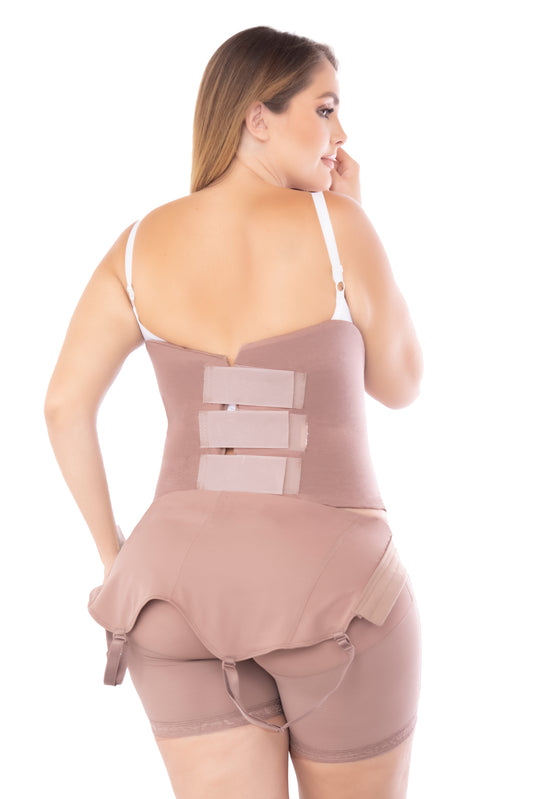
A front or side zipper may be easier to manage when movement is limited.
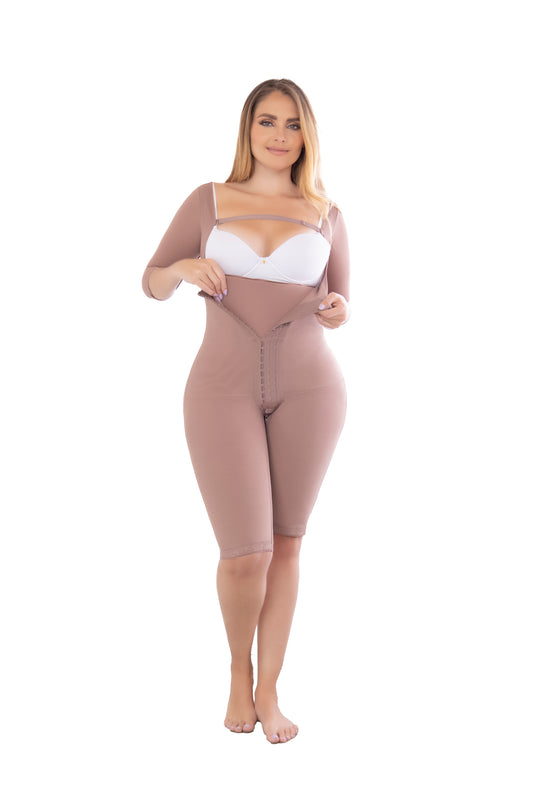
Multiple rows of hook-and-eye adjustments can also accommodate changes in swelling, but the selected closure should not create uncomfortable pressure over an incision or sensitive area.
Abdominal Reinforcement
Some garments include reinforced abdominal panels for additional structure.
Extra reinforcement, foam, or boards can change how pressure is distributed. These features and accessories should be approved for your procedure and current recovery stage.
Bathroom Access
A perineal opening or practical closure may make bathroom use easier during early recovery.
Confirm which design is appropriate based on your comfort, mobility, incisions, and medical instructions.
Garment Length
The appropriate length depends on the areas treated.
Options may include boyshort, mid-thigh, knee-length, or full-body coverage. The garment should not create a tight edge across an area affected by liposuction unless your provider approves it.
Early-Recovery and Later-Recovery Garments
Early-recovery garments commonly prioritize:
-
Softer support
-
Easier entry
-
Practical zipper closures
-
Space for swelling
-
Drain or bathroom access on selected designs
Later-recovery garments may provide:
-
Firmer support
-
More adjustment levels
-
Reinforced panels
-
A closer fit under clothing
-
Different shaping and coverage options
These categories vary by brand and are not universal medical standards. Your provider should determine when or whether you transition to another garment.
What About Underwear, Boards, and Foam?
Do not follow a universal rule about wearing underwear, foam, or an abdominal board beneath your garment.
Seams and added layers can create pressure points, but some providers intentionally prescribe specific accessories to support an individual recovery plan.
Follow your provider’s instructions for your skin, incisions, swelling, and treatment areas.
What Compression Can and Cannot Promise
Compression garments are commonly prescribed to support comfort and help manage swelling after body-contouring procedures.
However, a garment should not be presented as guaranteeing that it will:
-
Prevent seromas or other complications
-
Eliminate swelling
-
Tighten loose skin
-
Determine the final body contour
-
Replace professional follow-up care
Your compression garment is one part of a broader recovery plan that may also include medical appointments, wound care, movement instructions, and other treatments prescribed by your surgical team.
When the Fit Needs Professional Review
Contact your surgeon or qualified post-operative provider if your garment causes:
-
Severe or increasing pain
-
Numbness or tingling
-
Pale, blue, or discolored skin
-
Shortness of breath
-
New skin irritation or injury
-
Deep creases or uneven pressure
-
Pressure over an area your surgeon instructed you to protect
A garment that becomes noticeably loose may also need to be reassessed. Do not automatically choose a smaller or tighter size without professional guidance.
Need Help Comparing Lipo 360 Garments?
Distrimed offers post-operative garments with different torso coverage, closures, lengths, adjustment levels, and reinforcement features.
Our team can help you compare garment features and determine the appropriate size, but your surgeon or licensed healthcare provider should approve the final design and compression level.
Contact Distrimed for garment and sizing guidance.
Medical disclaimer: This content is educational and is not a substitute for medical advice. Recovery instructions vary by procedure, surgeon, health history, and healing progress. Always follow the instructions of your surgeon or licensed healthcare professional.

