
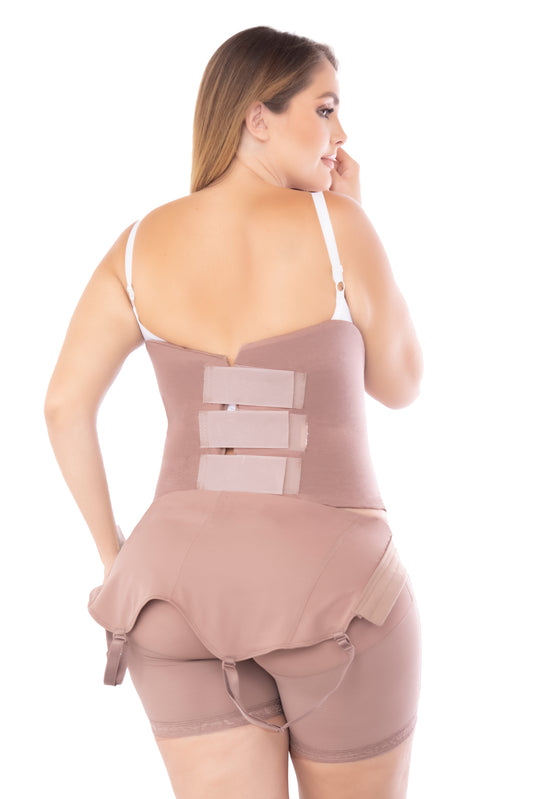

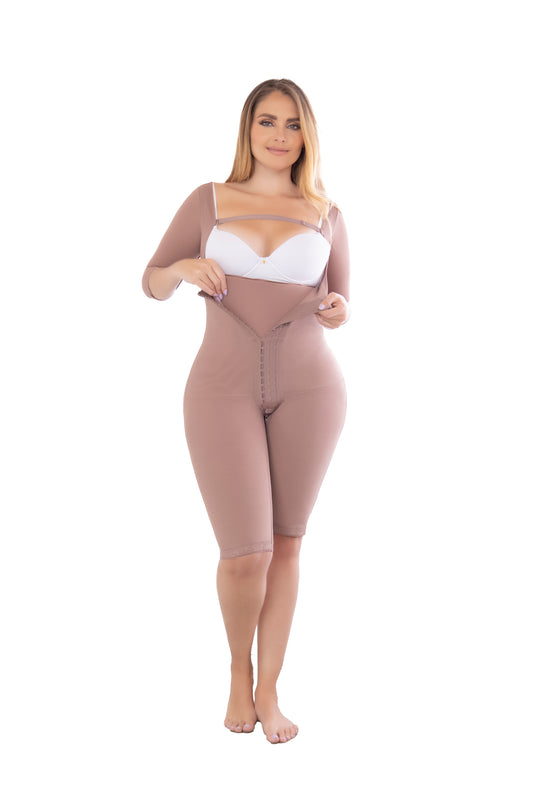


If you have been told to purchase a Stage 1 or Stage 2 faja, the terminology can be confusing. The most important fact is that these stages are not a universal clinical classification. They are commercial labels used by garment manufacturers, and their compression, construction, and intended use can differ.
Stage 1: Commonly Used for Early Recovery
A Stage 1 garment is typically designed for the period when swelling, tenderness, drains, and limited mobility may be present.
Common features include:
-
Light-to-medium or moderate support, depending on the brand
-
Softer materials and fewer rigid shaping elements
-
Zippers or simple closures for easier dressing
-
Drain access or a perineal opening on selected designs
-
Coverage selected for the treated areas
It should not feel crushing. Pain, numbness, breathing difficulty, skin discoloration, or worsening swelling requires prompt medical guidance.
Stage 2: Commonly Used After Initial Swelling Decreases
A Stage 2 garment generally provides firmer or more structured support. It may include:
-
Multiple rows of adjustment
-
Reinforced abdominal panels
-
A closer fit under clothing
-
Different lengths or coverage options
Firmer does not automatically mean better. Moving to a smaller or stronger garment too early can create excessive pressure. Your surgeon should approve the transition.
Stage 3: Usually Maintenance or Everyday Shaping
Not every manufacturer or surgeon uses a Stage 3 category. When the term is used, it usually refers to longer-term shaping or daily wear after the medical recovery phase.
A Stage 3 garment should not be assumed to provide a prescribed medical compression level unless the product documentation states one.
When Should You Transition?
There is no reliable date that applies to everyone. The appropriate time depends on:
-
The type of procedure
-
Current swelling
-
Skin condition
-
Incisions and drains
-
Circulation
-
Your surgeon’s recovery protocol
A garment becoming loose can be a reason to reassess its fit, but it is not permission to automatically increase compression.
Re-Measure Before Buying Your Next Garment
Your measurements can change as swelling decreases. Use the brand’s current size chart and measure according to its instructions.
Do not intentionally select a smaller size to create more pressure.
Need Help Comparing Faja Stages?
Distrimed offers first-stage and second-stage post-operative garments with different compression, coverage, closure, and adjustment features.
Our team can help you compare garment features and find the appropriate size, but your surgeon or licensed healthcare provider should approve the final design and compression level.
Contact Distrimed for garment and sizing guidance.
Medical disclaimer: This content is educational and is not a substitute for medical advice. Recovery instructions vary by procedure, surgeon, health history, and healing progress. Always follow the instructions of your surgeon or licensed healthcare professional.

