
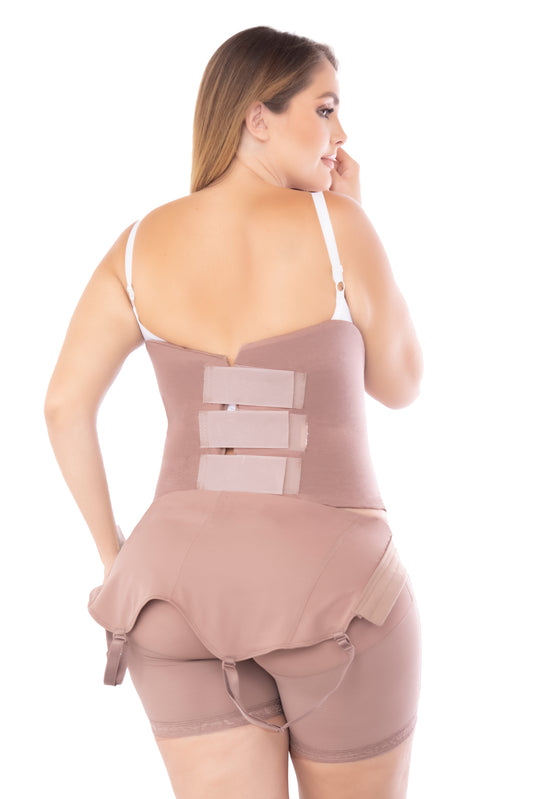

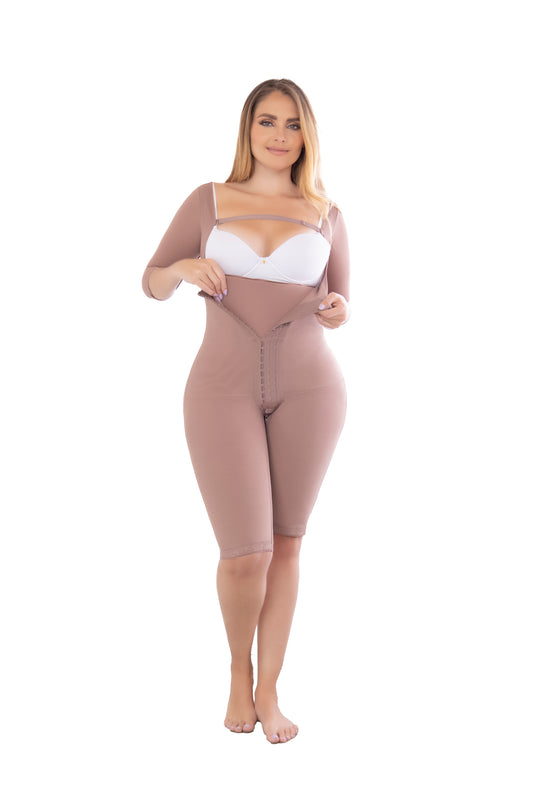


The safest answer is: wear your compression garment for the schedule prescribed by your surgeon. There is no single three-month rule that applies to every procedure or every patient.
Post-operative compression schedules vary according to the procedure, the patient’s body, the areas treated, and other factors evaluated by the surgical team.
What Determines How Long You Should Wear a Faja?
Your personal compression schedule may depend on:
-
The procedure and areas treated
-
Your surgeon’s technique and recovery protocol
-
Swelling, bruising, incisions, and drain status
-
Circulation, skin sensitivity, and medical history
-
How the garment fits as your recovery progresses
-
Whether you are using a binder, bra, faja, or another specialized garment
These factors can change throughout recovery, which is why regular fit evaluations are important.
Why Online Timelines Can Be Misleading
BBL, liposuction, tummy tuck, mommy makeover, and breast surgery are different procedures with different recovery needs.
Even two patients who had the same named procedure may have different treatment areas, incisions, swelling, and medical instructions.
For that reason, a schedule such as “23 hours a day for three months” should not be treated as a universal requirement. Your surgeon’s instructions should always take priority over a general timeline found online.
Can You Sleep in a Faja?
Only sleep in your faja if your surgeon instructs you to do so.
Some recovery protocols include overnight compression during early recovery. Others allow scheduled breaks or recommend a different garment for nighttime use.
The correct recommendation depends on:
-
Your procedure
-
Your current recovery stage
-
The garment’s construction and fit
-
Your skin and circulation
-
Your individual medical risk factors
If the garment causes pain, numbness, breathing difficulty, skin discoloration, or excessive pressure while resting, contact your medical provider promptly.
When to Stop and Contact Your Provider
Seek medical guidance if you experience:
-
Breathing difficulty or chest pain
-
Severe or increasing pain
-
Numbness or tingling
-
Pale, blue, or discolored skin
-
New wounds or significant skin irritation
-
Marked swelling on only one side
-
Deep creases or uneven pressure
-
Pressure over an area your surgeon instructed you to protect
Symptoms that may indicate an emergency require immediate medical care.
Do not make major changes to your compression schedule without speaking with the healthcare professional managing your recovery.
What If Your Faja Starts Feeling Loose?
Reduced swelling can change the fit of your garment. A garment that becomes noticeably loose may no longer provide the intended support.
However, this does not mean you should automatically purchase a smaller size or increase the compression.
Take your current measurements, consult the brand’s size chart, and ask your provider whether you need:
-
A different size
-
A different garment design
-
A change in compression
-
A professional fit evaluation
-
No change at the current stage
Need Help Comparing Recovery Garments?
Distrimed offers post-operative garments with different coverage, closures, adjustment levels, lengths, and support features.
Our team can help you compare garment features and determine the appropriate size, but your surgeon or licensed healthcare provider should establish your compression schedule and approve the final garment.
Contact Distrimed for garment and sizing guidance.
Medical disclaimer: This content is educational and is not a substitute for medical advice. Recovery instructions vary by procedure, surgeon, health history, and healing progress. Always follow the instructions of your surgeon or licensed healthcare professional.

